




Erin Tañada, the leader of the Liberal Party of the Philippines, points to one particular moment that made people sit up and take notice just how extreme the problem of corruption had become.
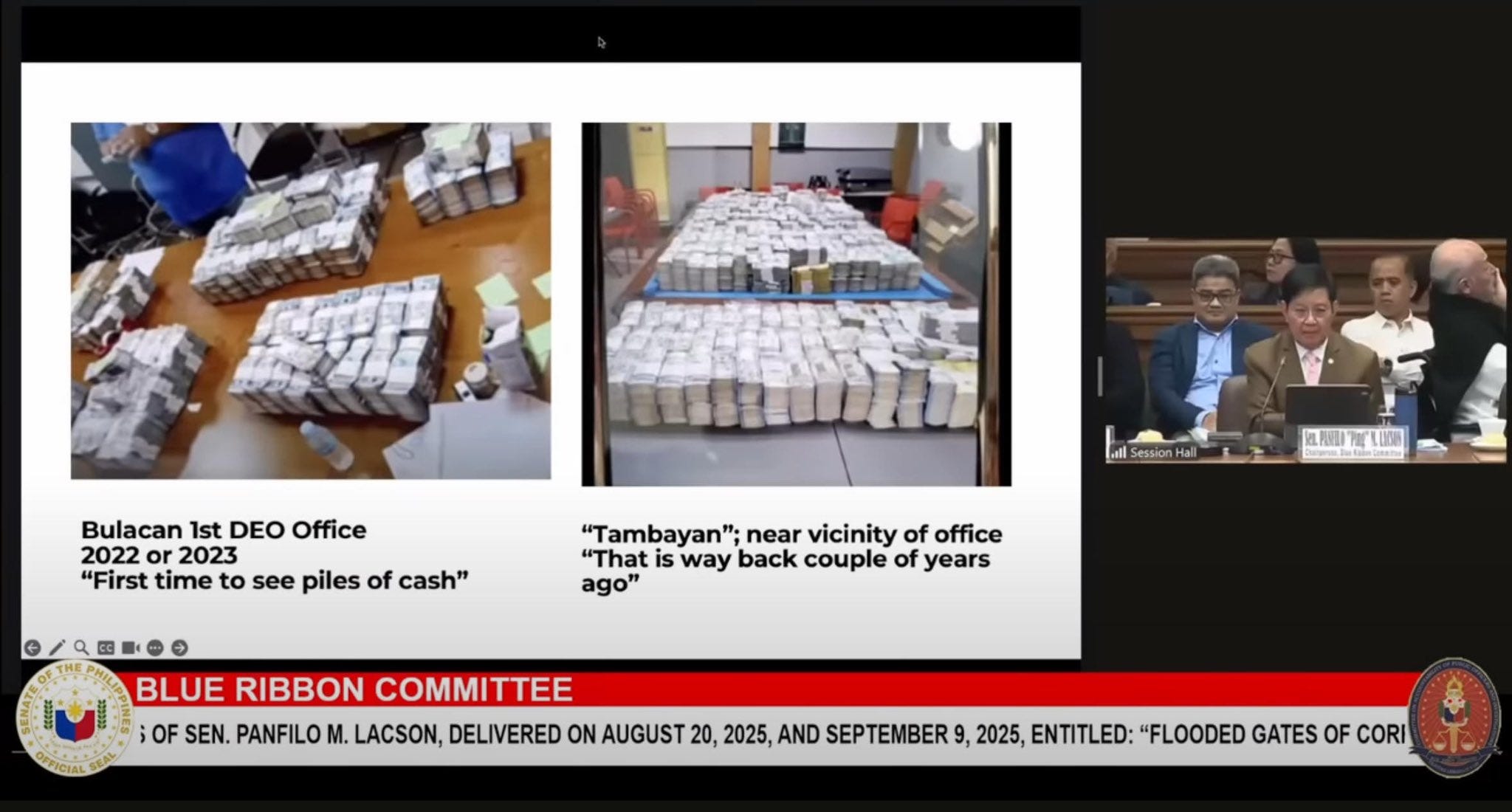
“I have to thank one DPWH (Department of Public Works and Highways) assistant district engineer,” he says, referring to an incident presented two months ago at the Senate Blue Ribbon Committee, an investigative body that examines potential political wrongdoing.
“It was because of his picture of the cash on top of the table that helped visualise to the people how bad corruption is in the country. And that started to anger people.”
Thousands of Filipinos are now opting to send a very loud and very clear message about their views on corruption. The first iteration of the Trillion Peso March — named after the alleged amount lost to corruption from funds budgeted for urgent flood control measures — saw an estimated 100,000 people taking to the streets across the Philippines on September 21. A follow-up protest is due to take place this Sunday, and organisers hope to exceed that number.
But even if more people demonstrate, one question remains: where will the movement go from here?
While Erin remains cautiously optimistic about the growing social movement, he also believes that more needs to be done at the top to demonstrate accountability. “It just needs political will,” he says. “You imprison all those who are involved [in corruption]. Because unless you throw them to jail and take back what they stole, then people will always say ‘ah, people can get away with stealing money’.”
A History of Politics
Erin is essentially a living archive of modern Philippine political history, having had a front-row seat to many major events. This was largely due to his grandfather, Lorenzo Tañada Sr., colloquially known as the ‘Grand Old Man of Philippine Politics’ — a lawyer who, after working to prosecute political figures who collaborated with the Japanese during the Second World War, entered public service.
“He became a senator for 24 straight years, all the way up until 1971. He retired at the age of 73, not knowing that the year after martial law would be declared,” Erin says of his grandfather, who then took up human rights causes and aligned himself with many who were opposed to the Marcos regime. “He was very active also in the People’s Movement (also known as the EDSA) against Marcos,” Erin adds.
This helped inspire Erin’s political journey, starting out in student politics in the 1980s during the later years of martial law. Following in the footsteps of his father (former Senator and Representative Wigberto Tañada Sr.), Erin was elected to the House of Representatives in 2004.

In 2009, Erin became the principal author of a bill defining and allowing the prosecution of crimes against international law, genocide and crimes against humanity, before becoming Deputy Speaker in 2010. After leaving the House of Representatives three years later and mounting an unsuccessful senatorial bid in 2019, he worked his way up to become acting head of the Liberal Party earlier this year.
Given his knowledge of the inner workings of the Philippine political system and his work on human rights issues, Erin seemed like a logical choice to speak to about what’s going on right now. In this episode of the Currents podcast, we discuss the growing social movement against corruption, the issues that led up to its formation, and the changes he believes are required to allow the system to evolve.
For more on the Trillion Peso March and the current political environment in the Philippines, you can listen to the first part in this series where I speak with Jean Enriquez, Executive Director of the Coalition Against Trafficking in Women – Asia Pacific, and Josua Mata, Secretary General of the labour rights group, SENTRO:
Opening the Floodgates: Inside the Growing Protest Movement in the Philippines (Part 1)

For perspective, 1.9 trillion pesos — the amount the Philippine government has ostensibly spent on flood-control measures over the past 15 years — is equivalent to around 33 billion US dollars. Of this, more than half is alleged to hav…


