

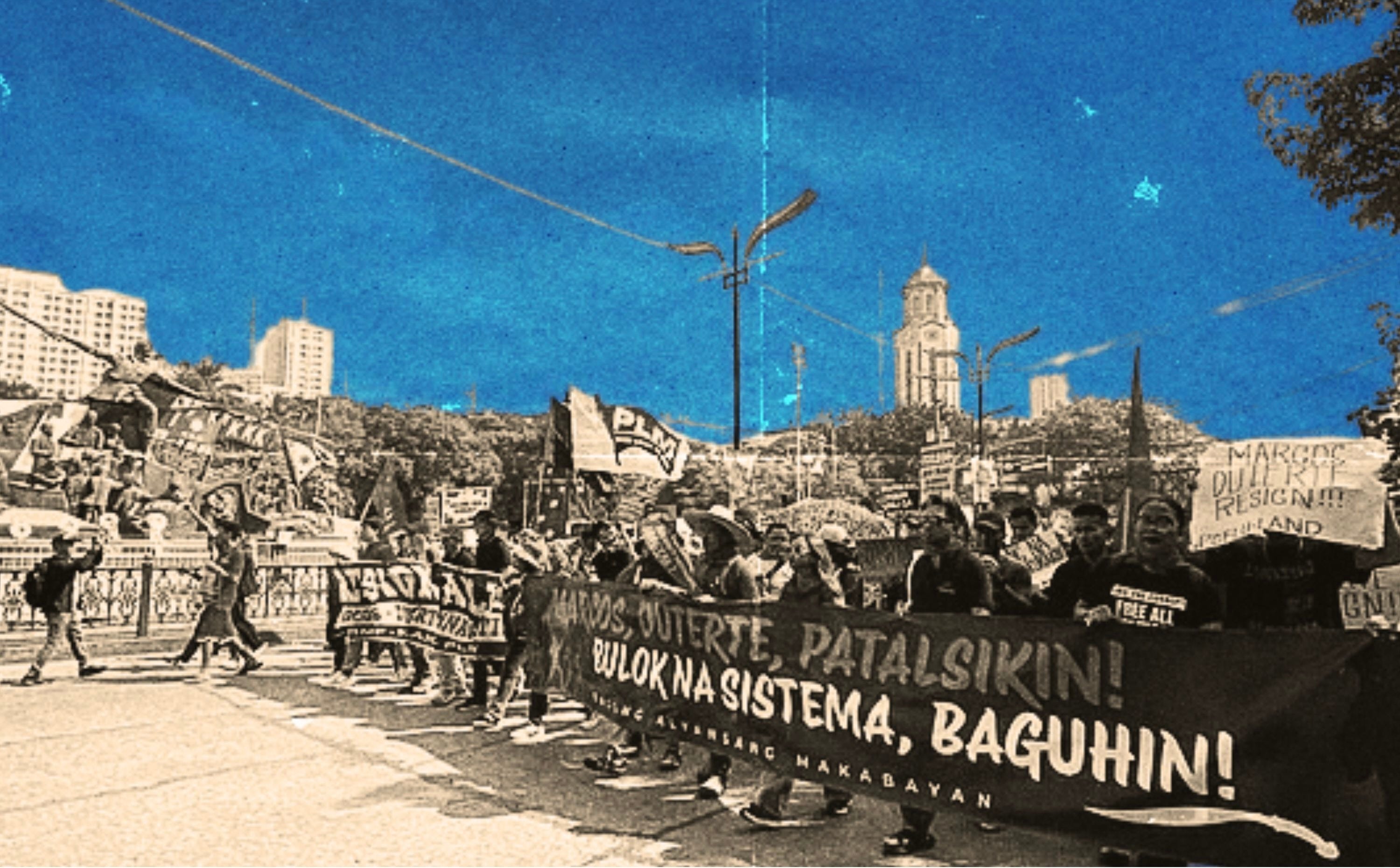
Tens of thousands of people took to the streets across the Philippines on November 30. Although thousands of police officers were deployed, the protests generally took place without any major incident.
These were the latest large-scale demonstrations in the Trillion Peso March, a nationwide movement that has swept the Philippines over the past few months as people reacted in anger to revelations of widespread corruption and money siphoned from flood control projects.
The real question now is whether or not this mass movement has brought — or will bring — any serious change to the political system and institutions meant to prevent impunity and keep those in power in check.
For more context, you can listen to the previous episodes in this series: the first, where I spoke with rights activists Jean Enriquez and Josua Mata, and the second, my conversation with Erin Tañada, the head of the Liberal Party of the Philippines.
For this concluding episode of the series, I speak with Sylvia Estrada-Claudio, an academic who’s been involved in the movement.
On A Personal Note
As you may have guessed, this will be the final episode of the Currents podcast this year, unless something particularly catastrophic happens.
I’m writing this from Scotland. This the first time I’ve been back to the UK in eight years. I’m also attempting to type this sans glasses (having dropped them on the plane a few days ago, which was clever of me), which essentially means that I’m relying on muscle memory, squinting and guess work, hence the relatively short article. But if I can regain my vision in the next week or so then I plan to do a newsletter wrap of 2025, mostly going over the main stories that have been covered in Currents since its launch in late February.
Until then, this is as good a time as any to wish everyone a happy Christmas — I truly hope everyone has a wonderful time wherever you are, and that 2026 will be a much-needed fresh start.