


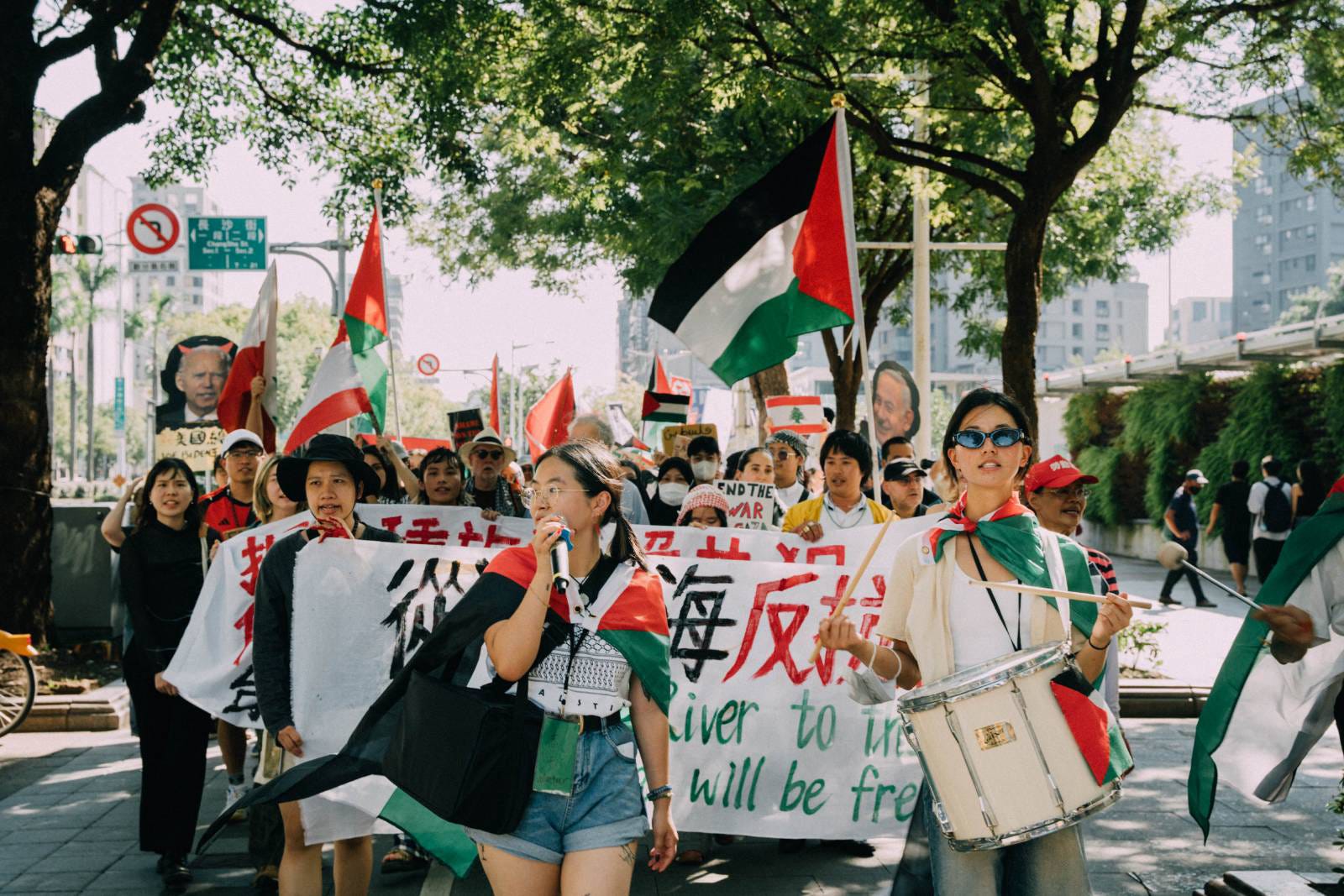
I met Aurora Chang not long after she’d participated in a demonstration against a pro-US and pro-Israel rally in central Glasgow to celebrate the bombing of Iran by the two countries.
“Unfortunately they outnumbered us by a lot!” she says with a laugh, mildly irked that the pro-Palestine groups hadn’t been able to mobilise more quickly.
We’d arranged to meet in early March at the University of Glasgow in Scotland, where 26-year-old Aurora is currently doing a Master’s degree. From Taiwan and a supporter of her nation’s independence, she maintains that her nationality forms a core part of her political identity and informs her human rights work.
“Whenever people ask me [how I got involved in activism], I always say that being Taiwanese is the beginning of my political awakening, because it's an inherently political identity to be Taiwanese,” she says.
“All these other liberation movements I’ve been a part of — for Palestine, for Ukraine — I think my support for them is based on my consistent belief in everybody’s right to self-determination, and the people’s right to resistance, and the struggle against imperialism and colonialism.”
Being an Activist in Taiwan
After supporting Hong Kong’s pro-democracy movement while studying in the UK, Aurora began working for a Taipei-based NGO working on Tibet for several years. She also started to raise awareness and support for Ukraine after Russia’s invasion in February 2022. More recently, Aurora has become heavily involved in the pro-Palestine cause organising against Israeli violence in Gaza after Hamas’s attacks on October 7th 2023.
“Over the last two or three years, we’ve made some progress. There are definitely more Taiwanese people who are open to changing their minds on Israel and Palestine,” she says.
“But it is still a pretty tricky issue to talk about because of Taiwan’s own position and relationship with the US and Israel,” she adds.
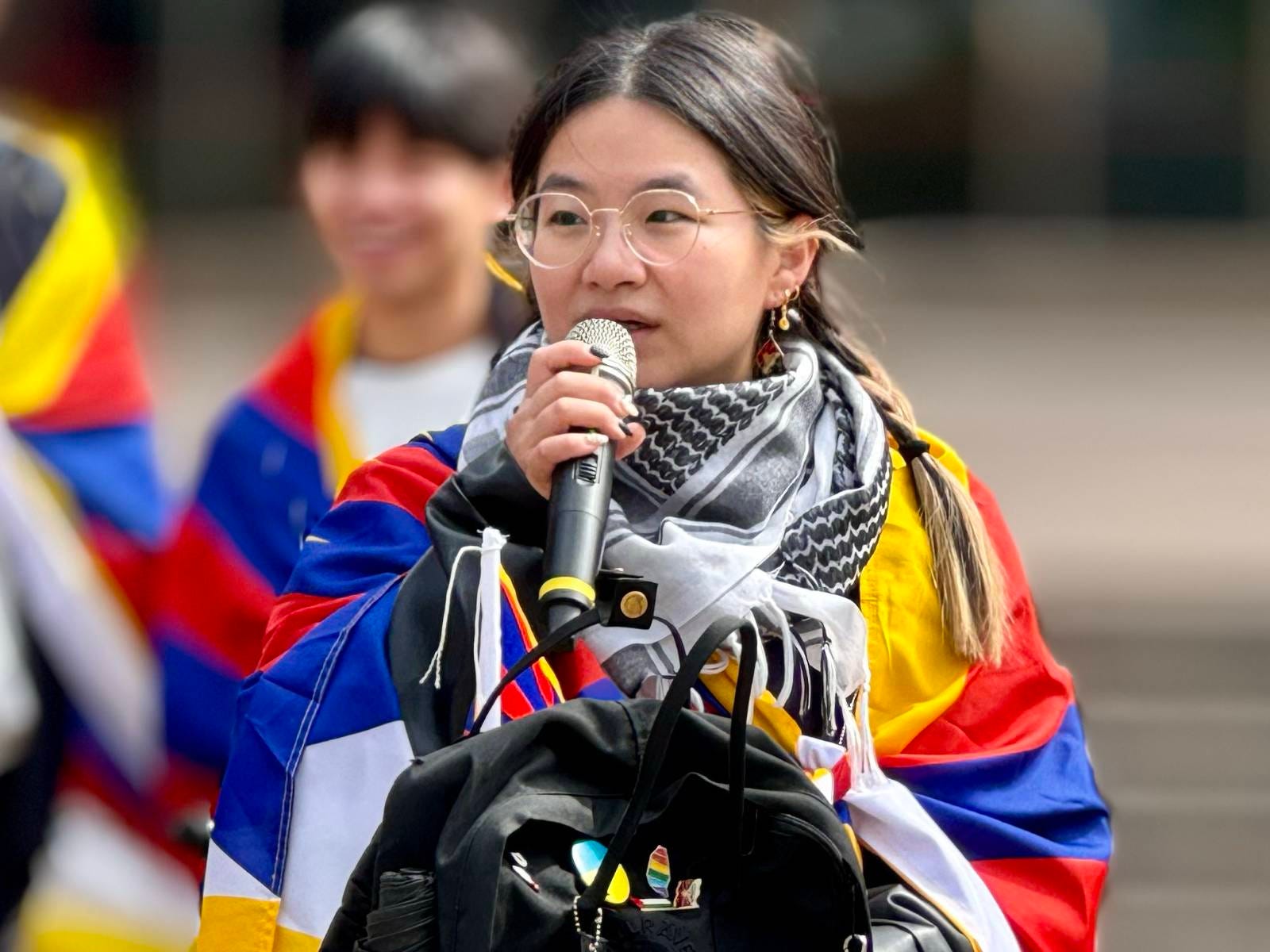
While she supports Taiwanese independence and is critical of US foreign policy, Aurora is also aware of how much her home country relies on US support — particularly in regard to deterring the risk of an invasion by China. “Doing this does make you pretty cynical,” she says, adding that she’s been accused of both being a plant of the US government and a shill for the Chinese Communist Party.
“From the perspective of people who view only American imperialism as being true imperialism, they [think] Taiwan is like a CIA outpost or something. Like a lapdog of the American empire. It makes navigating all of this very difficult.”
These tensions have been compounded by the Trump administration’s recent attacks on Iran and Venezuela, while threatening shows of force against other places ranging from Cuba to Greenland.
“So much of our resources, our government’s resources, are being put into building ties with the US because they are allegedly our supporters in the case of a Chinese invasion,” Aurora says. “But we don’t even know that now, with the US regime being as it is.”
On A Personal Note
In this episode of the Currents podcast, Aurora and I talk about how she got into human rights activism, the pushback she’s faced and how she feels about her work going forward.
But before you dive into the podcast, I’d like to thank everyone who has supported this newsletter for their patience over the last few months.
One of the many things affected by the US and Israel’s attacks on Iran were my flights back to Southeast Asia. I was due to head back at the beginning of the month, but — between flights being rescheduled, then suspended indefinitely, and costs shooting up — these plans have now been postponed indefinitely. I hope to be back in Asia soon, but am still in Scotland for the time being.
I hope to make up for this over the following months. But whatever the future holds, your support for my work and for independent journalism in (and on) Asia remains hugely appreciated — my work wouldn’t be possible without your continued support.


