



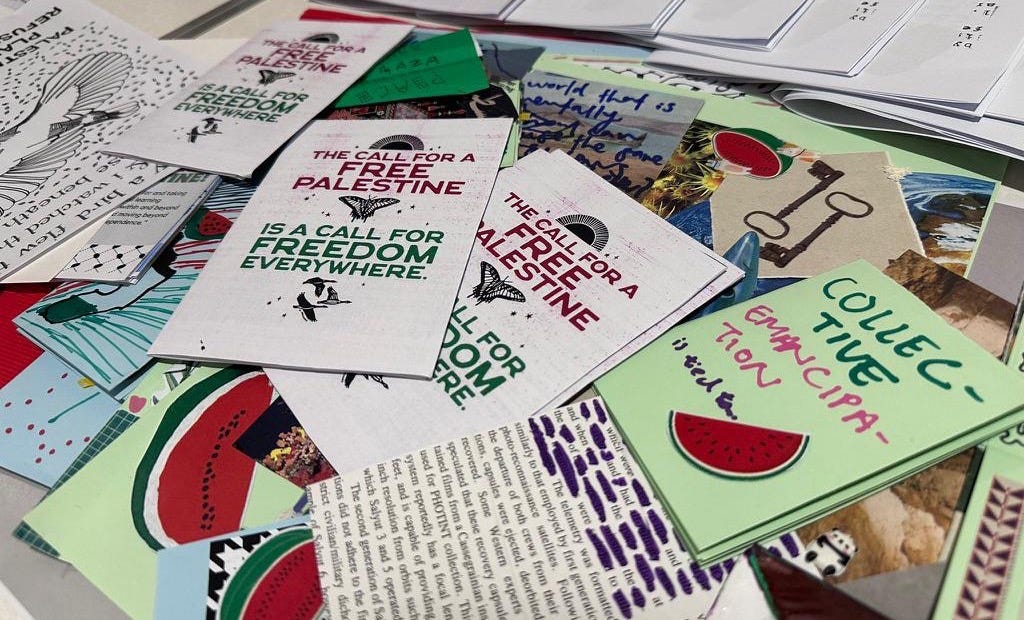
From the outside looking in, it’d be easy to fall into the trap of thinking that Singapore is an inherently docile, borderline apolitical nation.
Internationally, the Singapore government has worked diligently to present an image of a hyper-modern, saline-coated city-state, with political stability and a booming economy, resting on a foundation of ‘soft’ authoritarianism. Domestically — going by the ballot boxes, at least — Singaporeans seem satisfied with this arrangement, routinely reelecting the People’s Action Party (PAP), which has ruled Singapore with a parliamentary super-majority since the country’s independence in 1965.
The PAP’s relationship with the local populace has often been surmised as one that involves a ‘trade-off’: an unofficial social contract within which certain civil liberties, that one might take for granted elsewhere — such as publicly speaking out on politically sensitive issues or the right to protest — are curtailed in exchange for overall greater safety, security and financial assurances.
Enforcement of this system has usually manifested in police investigations, criminal prosecutions and/or defamation lawsuits, levied against the likes of opposition politicians, activists, members of the media, and, in more recent years, everyday citizens whose blogs or social media posts have popped up on the authorities’ radar. This effect is amplified by a compliant media landscape and pro-establishment online trolls, ready to publicly carry the government’s water when needed.
The message is clear: play along and you can enjoy a nice, steady, comfortable life; make a big deal of certain issues, and things can become very difficult for you.
In almost six decades of operating in this environment, civil society activism in Singapore was whittled down to a nub, and well into the 21st century it inhabited a niche, fringe-like existence on the social periphery.
Turn and Face the Strange
Mel Eng is a 21-year-old Singaporean trans woman who’s about to enter university.
A bit over a year ago, while undergoing her mandatory military service, Mel started to take an interest in social issues, such as Singapore’s use of the death penalty. This, in turn, introduced her to Student Activists for Transformative jUstice (SATU), and, after hearing what they had to say, she asked if she could take part in their movement.
“It was very spontaneous […] very much ‘fuck around and find out’ kind of vibes,” she says about her decision to join SATU. “But afterwards, as I got involved, the commitment shifted from something [that] I do for fun to understanding the political weight behind all these things.”
Since then, Mel has worked on causes such as death penalty abolition, raising awareness of SATU’s work, speaking at rallies, and showing up in solidarity when friends and peers are prosecuted for their activism. She is also involved with Students for Palestine SG, a group calling on Singapore to leverage its close relationship with Israel to apply pressure to end the genocide in Gaza
Barely a few years ago, Mel would have been something of an anomaly in Singapore. Youths who have spoken out about politically sensitive issues have often been quickly warned off, whether through the risk of police investigations, fear of the ways state retaliation might affect their current or future employment, or even just overbearing parents demanding that they knock it off. Concerns like this have gestated in the minds of many Singaporeans from a young age, fostering a culture of self-censorship.
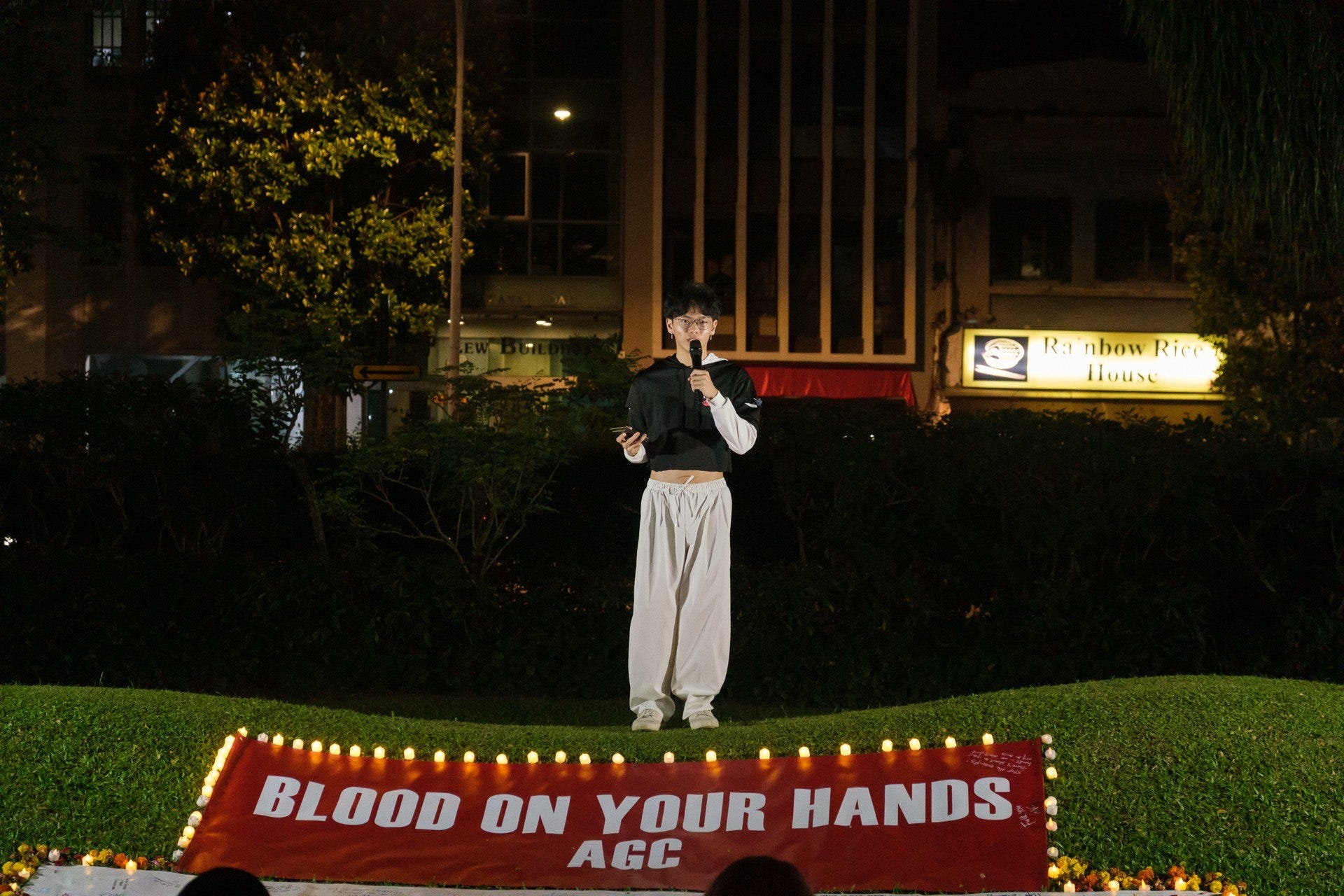
But over the last four or five years, there has been a tangible shift in attitudes — particularly among younger Singaporeans.
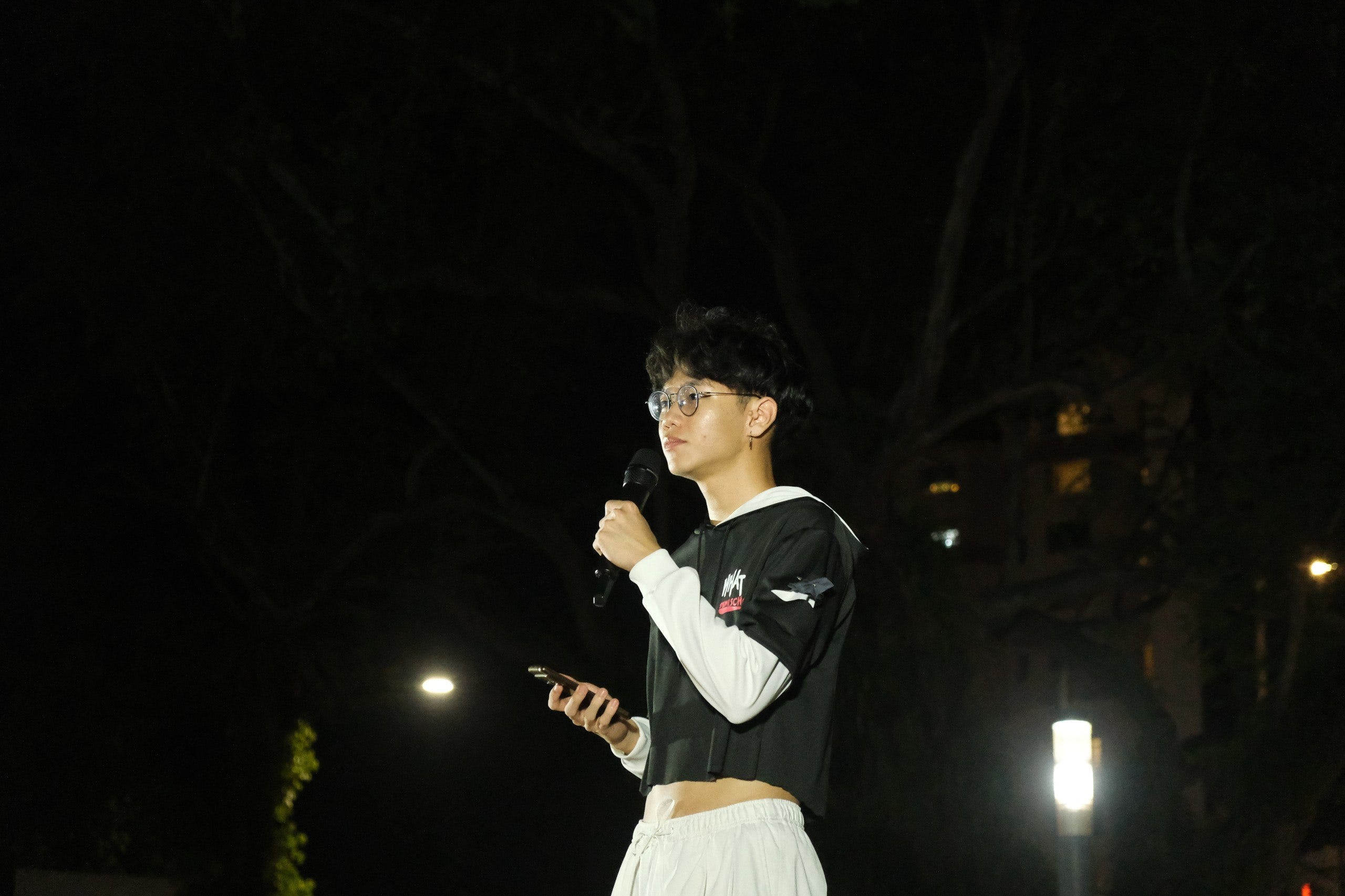
Mel is now part of a growing movement of Singaporean youths who are rejecting complacency, and embracing activism and organising. Instead of censoring her views to avoid the authorities’ gaze, Mel, and others like her, are doing the equivalent of firing a flare into the sky.
Generational trauma
A confluence of reasons have led to this bucking of Singaporean societal norms, ranging from the socio-economic to the ideological; from the domestic to the international.
For starters, a lot of younger adults in this day and age feel like they have very little left to lose. Mel, for example, is preparing to enter a workforce with dwindling job prospects and increasingly limited long-term job security, in a country with skyrocketing living costs and spiralling property prices, under a government reluctant to make broader systemic changes while being antipathetic to negative scrutiny. While these are issues that will resonate with people in many countries around the world, in Singapore they’re also reminders that the ‘trade-off’ locals were so heavily conditioned to believe in is now feeling increasingly one-sided.
Gen Zs are also coming of age at a time of looming existential crisis, as climate change-induced rising global temperatures and natural disasters — which are already exceeding many analysts’ worst case scenarios — are on course to wreak environmental, health and economic devastation across the globe.
Alongside this, human rights issues have gained steady traction over the past few years in Singapore.
The country’s anti-death penalty movement has been growing throughout the 2020s, and gained particular attention in 2021 and 2022 with the case of Nagaenthran K. Dharmalingam, a 33-year-old man with psychological disabilities who was hanged for a non-violent drug offence — a move that drew international condemnation of Singapore’s capital punishment regime.
And as with many of her peers, Mel has also been equal parts shocked and disgusted by the devastation caused by the Israel Defence Forces (IDF) in Gaza, following the October 7 attacks carried out by Hamas in 2023.
For a generation as chronically online as Gen Z, those with any interest in human rights and politics are likely to find their social media feeds inundated with photos of the aftermath of Israeli military strikes, alongside first-hand accounts accusing the IDF of intentionally targeting civilians, in what numerous human rights groups, the United Nations and the world’s leading genocide scholars have condemned as a genocide. “It was… I guess ‘sobering’ is one word, but it doesn’t capture everything,” Mel says solemnly.
Israel’s actions have also struck a particular chord with some Singaporeans by pulling focus towards long-standing bilateral ties between Singapore and Israel: “That feeling of helplessness and that feeling of grief, just seeing people literally die, while not being able do anything, while your own country is complicit in this… It really did change something in me,” Mel adds.
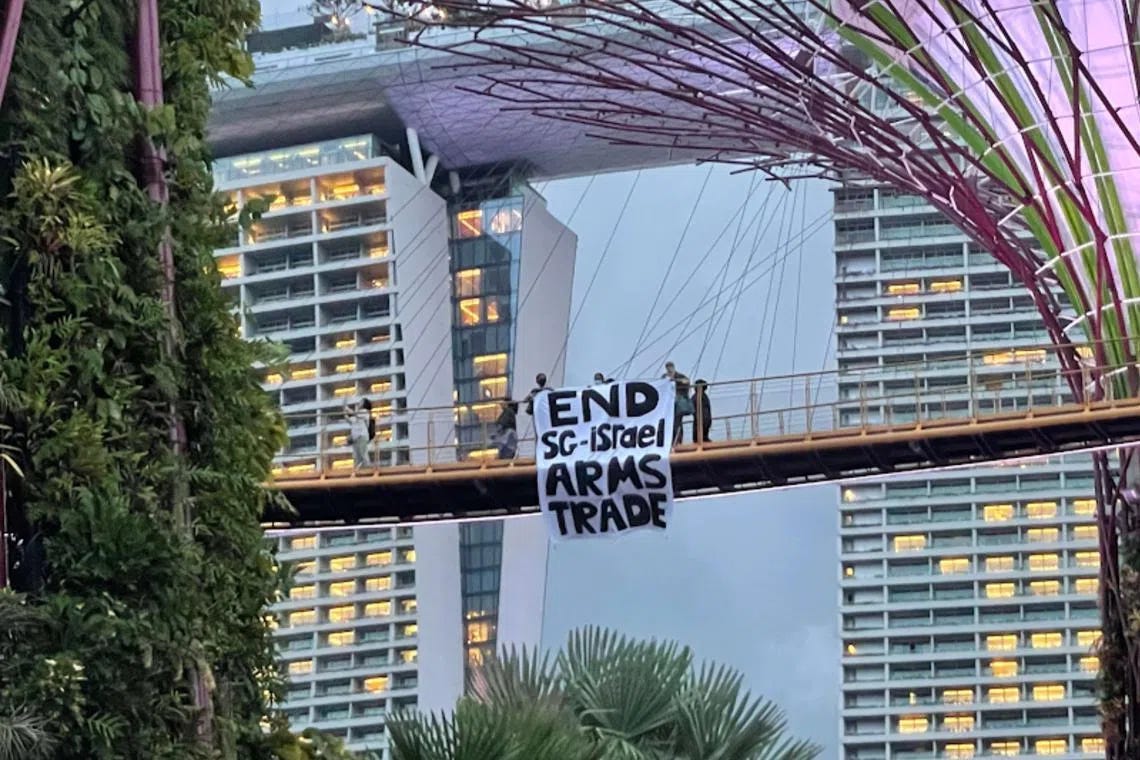
She hasn't been alone. In 2024, three protestors unfurled a banner that read ‘End SG-Israel Arms Trade’ in Gardens By The Bay, one of the country’s most popular tourist destinations.
Hanging a banner from a bridge might seem like a mundane act of defiance in many other nations. But in Singapore such things are virtually unheard of, with such activities being heavily restricted; those involved in displaying the banner were ultimately given police warnings.
From Past to Present
It wasn’t always like this.
In the 1950s and ‘60s Singapore maintained thriving civil society networks that flourished in the country’s anti-colonial movement. Left-wing political organisations, student groups and trade unions began mobilising against British colonial rule.
This changed after Singapore gained independence, under the country’s first prime minister, Lee Kuan Yew. Political clampdowns began taking place, activists and opposition politicians were detained — sometimes for years without trial — and, in a relatively short span, spaces and opportunities for movements to thrive were gradually eroded.
As time passed, the PAP government worked hard to keep a step ahead of the curve, in part by dressing state persecutions in banal, formal and bureaucratic processes and ‘legalese’. After the 1980s, gone were the days of police dragging people from their homes in the early morning hours; now one might expect a polite but sternly worded letter notifying them of a police investigation (which could last for years and end in criminal prosecution), or the threat of libel action (which could cripple them financially).
One such move has been to introduce broadly worded restrictions on public assembly, such as the Public Order Act (POA) of 2009. Ostensibly in place to protect public safety, the POA has in effect restricted people from making even the most prosaic of political statements in public, giving the authorities plenty of discretion as to what is deemed an illegal assembly — including ‘assemblies’ of only one person.
While the government’s methods have changed and their language updated, one thing has remained constant — for anyone getting involved in activism in Singapore, it’s not really a question of whether the authorities will go after them, but of when and what for.
“It just pissed me off”
When I recorded this interview with Mel in late August, 2026, one of the things we discussed was the likelihood of her or her colleagues in SATU eventually being targeted by the authorities. A little over a week later, the Singapore Police Force went on a charging binge.
Over the course of September, more than a dozen activists were informed they would be facing criminal prosecution for various alleged offences under the POA (including Mel’s fellow SATU activist, 24-year-old Elijah Tay, and anti-death penalty activist/the impossibly patient spouse of this article’s author, Kirsten Han).
The charges largely relate to activities like taking group photos outside the State Courts and vigils for death row prisoners outside Changi Prison; while the penalty in most cases is a monetary fine, some activists have been accused of alleged offences that carry potential prison sentences.
There has been much speculation about why the Singapore authorities are going to these lengths — and why now? Is this a response to increasing mobilisation on certain issues? Are they getting jittery about pro-Palestine, climate, or anti-death penalty activism? Or is it nothing more than an attempt to clear a backlog of all the police investigations that have been mounting over the years?
If it was an attempt to stymie or dissuade people from speaking out it seems to have had the opposite effect, bringing numerous Singaporeans together in a sense of shared anger. When six activists were charged at the State Courts on September 9, hundreds of Singaporeans showed up in solidarity, packing the courtroom.
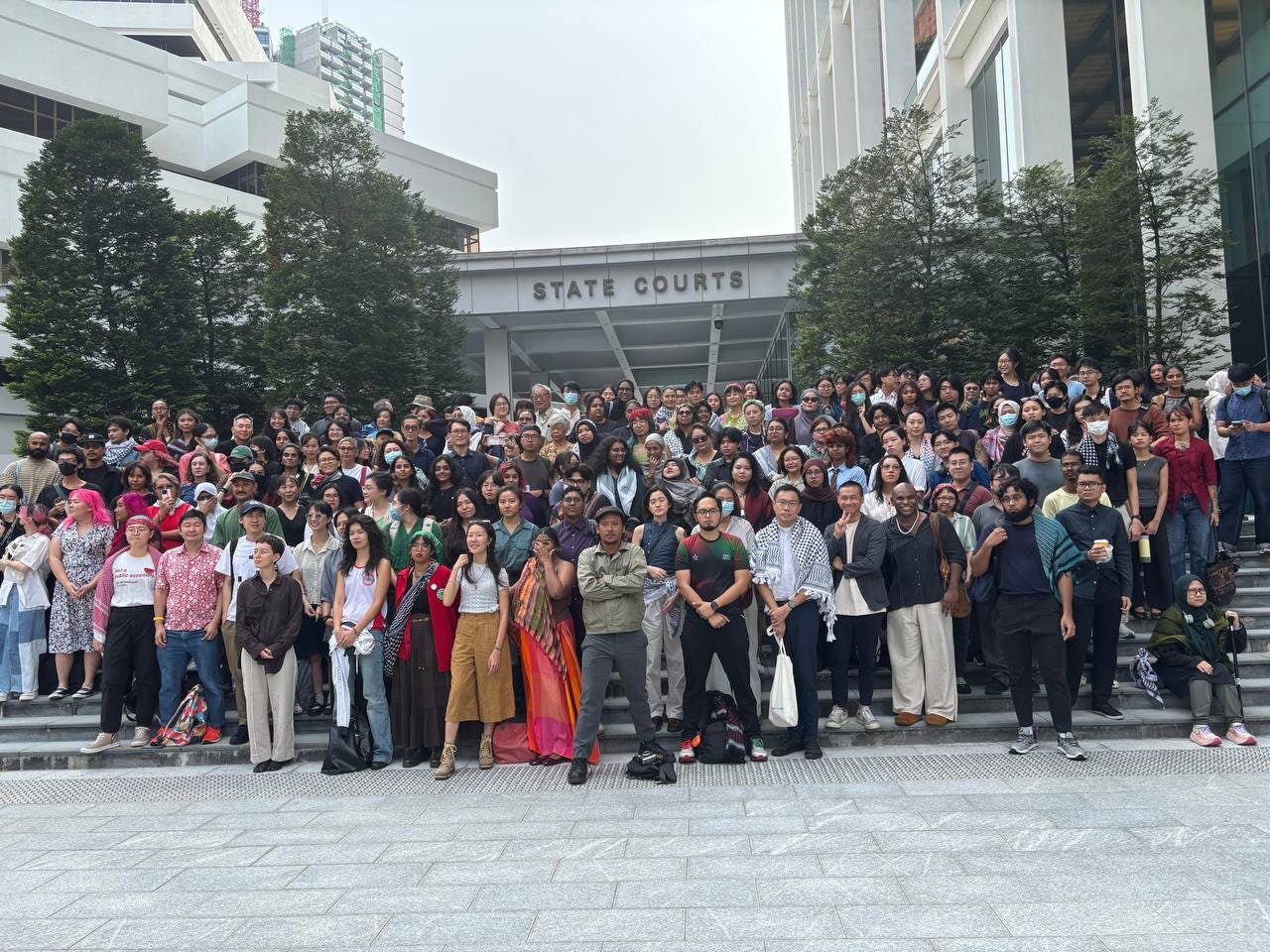
While Mel wasn’t charged on this occasion, previous interactions with the police seem to reflect not just her attitude to pressure from the authorities, but also that of those now being summoned to court: she mentions being questioned by the police after going door-to-door in a residential area to speak to people about the death penalty. “That was quite eye-opening. We’re just door-knocking which is perfectly legal,” she says.
“It just pissed me off. It was just like ‘What the fuck? Fuck you, I’m going to keep doing this’.”
Before now, people getting into activism in Singapore might’ve been intimidated or scared off by the prospect of a police interrogation room, a lengthy investigation or criminal charges. Now activists like Mel are far more mentally and emotionally prepared for what may come.
For this episode of the Currents podcast, I speak with Mel about what her life has been like after she took the plunge into the world of youth activism in Singapore, which — after decades of stagnation — seems to be undergoing a resurgence.
In addition to this interview with Mel, I previously spoke with Lim Kay Siu, a Singaporean actor who, alongside his wife and fellow actor, Neo Swee Lin, were among the people who were charged recently. You can listen to our discussion by clicking on the link below!
Actor/Activist: An interview with Lim Kay Siu

Many Singaporeans recognise Lim Kay Siu from his work on sitcoms like Phua Chu Kong Pte Ltd, but I was introduced to him through his work on the stage. More recently, I’ve been learning about Kay Siu’s livestreaming, on various social media platforms, with his wife Neo Swee Lin. It’s not every day that you find out you know a duo whose chosen weapons fo…


